


Welcome to BAIL-PSP
HOW BAIL-PSP WORKS

From Learning Evidence to Competence Achievement

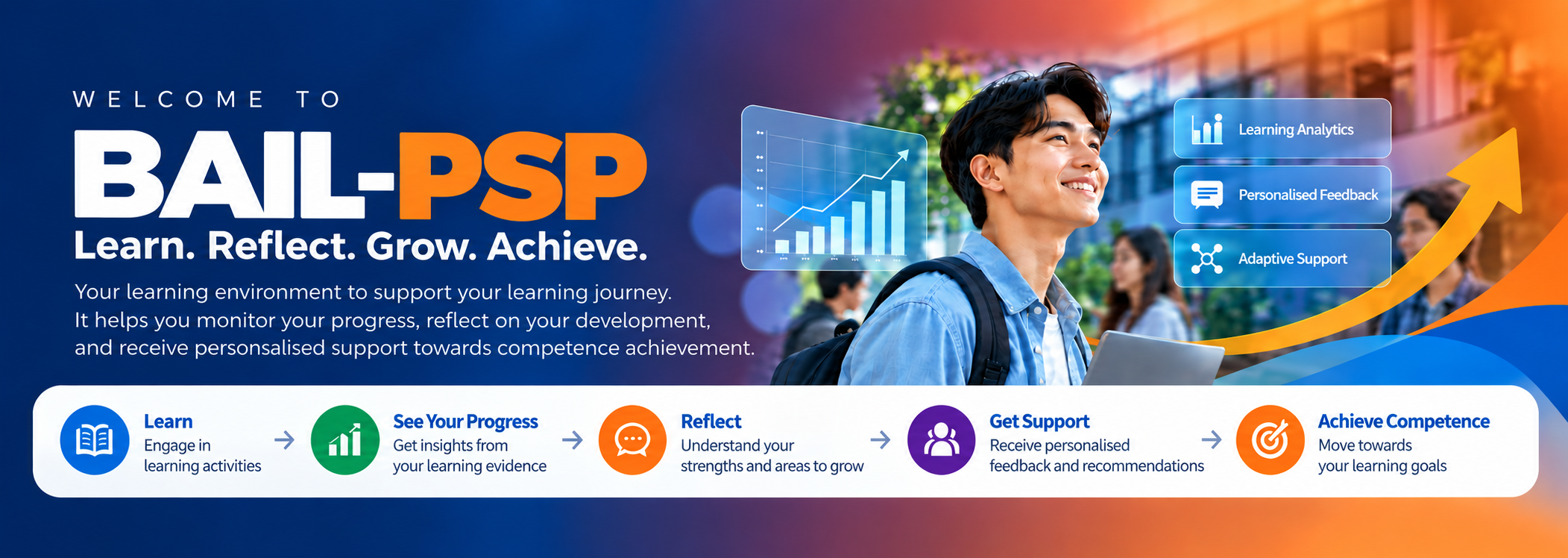
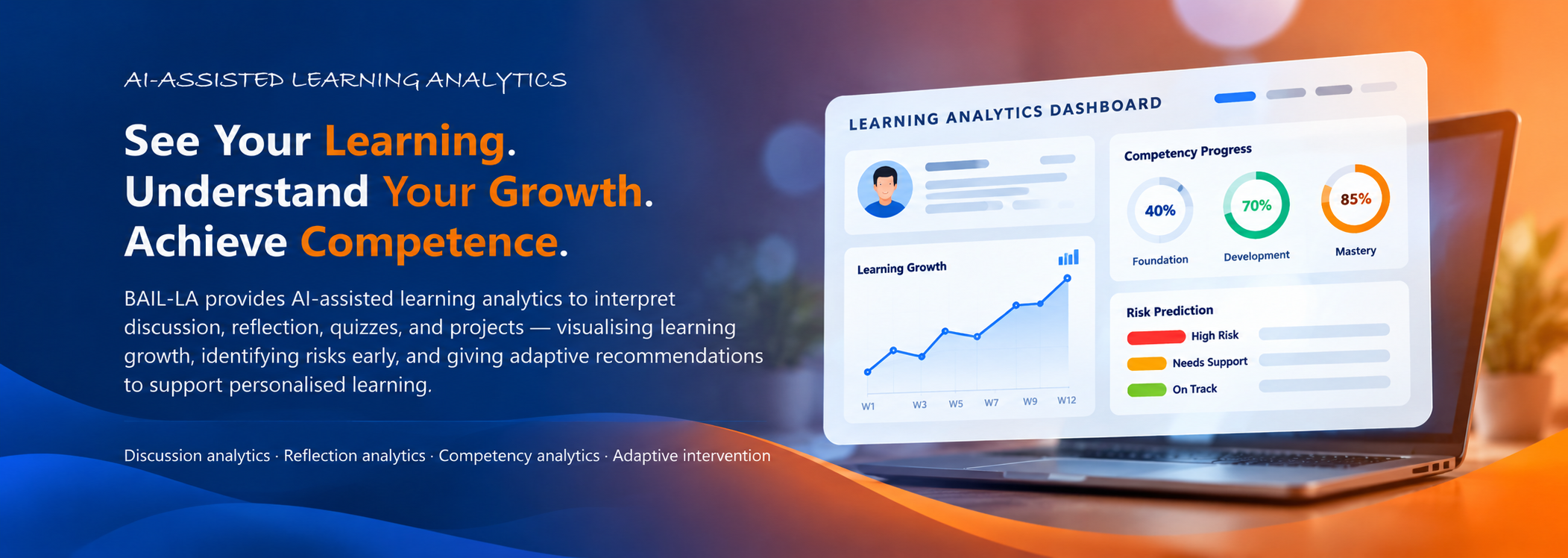
BAIL-PSP (Beyond AI Learning – Post-School Pedagogy) is an emerging pedagogical framework that positions AI moderation in educational technology as a means of strengthening the role of teachers as facilitators and motivators of active, longitudinal, and adaptive learning. Grounded in constructivism, BAIL-PSP places reflection and practice at the core of the learning process. AI strengthens learning analytics and the psychometric interpretation of diverse evidence of learning development over time. Across stages of learning, a self-dialogic process is designed to encourage learners to reflect on their own learning evidence and guide their development towards competence achievement.

01

Learning Evidence

Evidence from discussion, reflection, assessment, projects, and learning activities.

→
02

Momentary Interpretation

Interprets what the learner demonstrates at a particular learning moment.

→
03

Learning Growth

Tracks patterns of progress, stability, acceleration, and emerging risk across time.

→
04

Self-Dialogic Learning

Enables learners to interpret their own evidence, reflect on progress, and take greater responsibility for learning.

→
05

Adaptive Support

Translates learning evidence into feedback and intervention towards competence achievement.

Explore the Concept →
RESEARCH & DEVELOPMENT

From Research Foundations to Adaptive Pedagogy

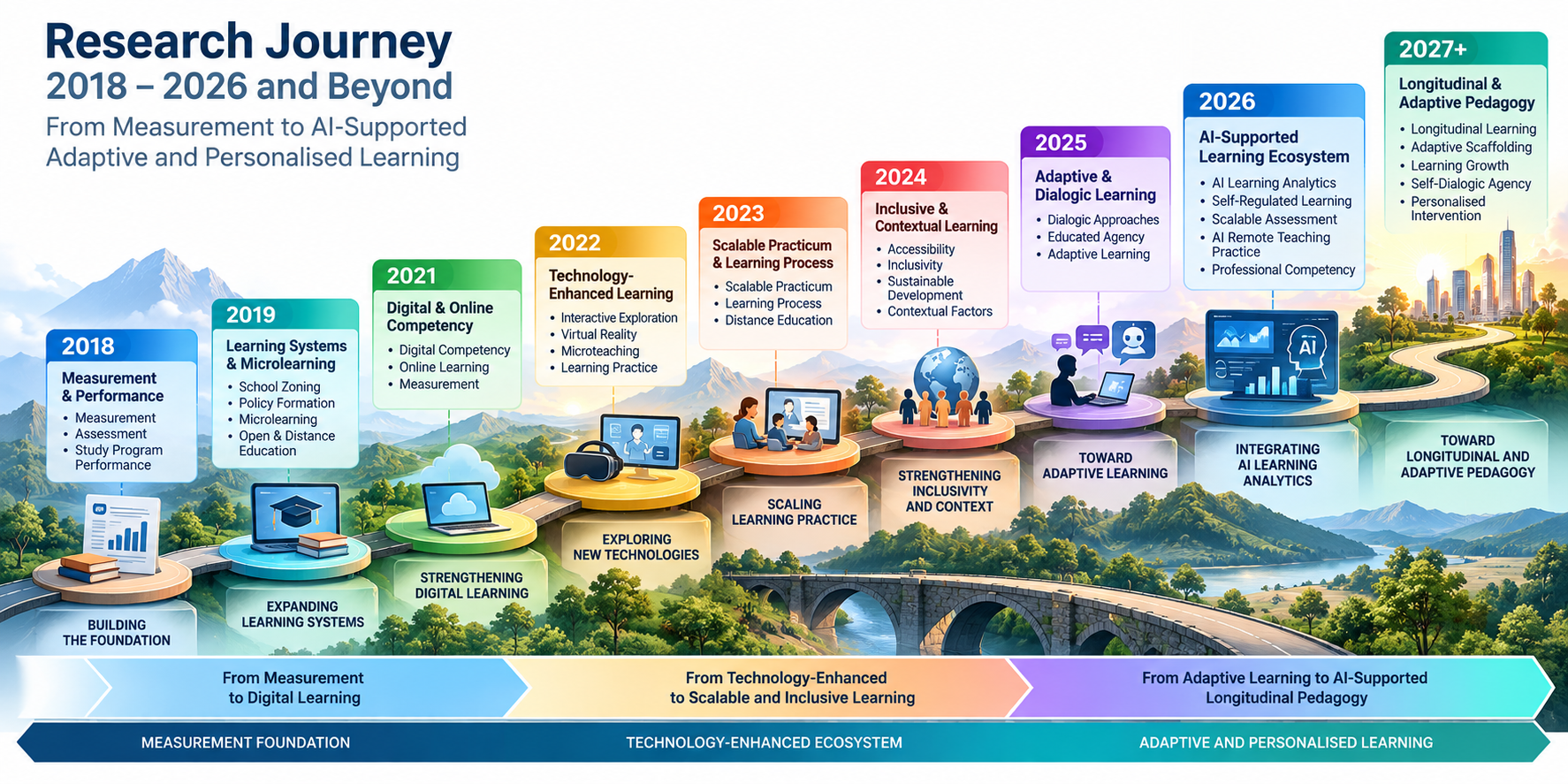
BAIL-PSP has been built upon a sustained programme of research since 2018, spanning educational measurement, digital and online competencies, scalable and virtual learning environments, accessibility and readiness for online learning, and AI in education. This evolving research trajectory has led to a focus on longitudinal learning analytics, adaptive pedagogy, and self-dialogic agency, integrating AI and psychometrics to interpret learning development over time and support adaptive pedagogical responses. Together, these developments provide the foundation for the BAIL-PSP ecosystem.

BAIL-PSP Research Journey 2018–2026 and Beyond
Explore the Research Journey →
LEARNING PERSPECTIVES · ANALYTICS

Pedagogical Orientation Over Time

Cumulative distribution of pedagogical orientations across survey sessions.

Admin Login →
Data mode: Cumulative· Each point includes all responses through the end of that period.

1. Distribution of Primary Orientations

Cumulative K1–K7 distribution; each response counted once.

K1K2K3K4K5K6K7

2. Integrated Orientation Profiles

Single, consecutive and non-consecutive integration (proximity threshold ≤5 percentage points).

Integration does not double-count responses.

What the Survey Reveals

Join Survey

Understand your pedagogical orientation and how it influences the way you support learners.